Thanks to Ben, Kate, and the great folks at Transition Town Montpelier and Yestermorrow (not to mention the other presenters) for making this wonderful night happen!
Tuesday, February 21, 2012
The Power of the Arts
I was invited to participate in Transition Pecha Kucha in Montpelier. 20 slides/20 seconds each, talking about working towards a world without oil.


Monday, January 30, 2012
Fossil Fuel Freedom
350Vermont in collaboration with the Sierra Club, the Vermont Worker's Center, and a bunch of other groups just launched the Fossil Fuel Freedom campaign. We did a big press conference at the Statehouse, and here's some video of my remarks as Event M.C. More on YouTube, of course...
Thursday, January 19, 2012
Yes Yes yes
 My friend Karen just sent me this poem by Kaylin Haught. I love it!
I asked God if it was okay to be melodramatic
and she said yes
I asked her if it was okay to be short
and she said it sure is
I asked her if I could wear nail polish
or not wear nail polish
and she said honey
she calls me that sometimes
she said you can do just exactly
what you want to
Thanks God I said
what if I cavort with squawking saints
forage with a crowd of long legged water angels
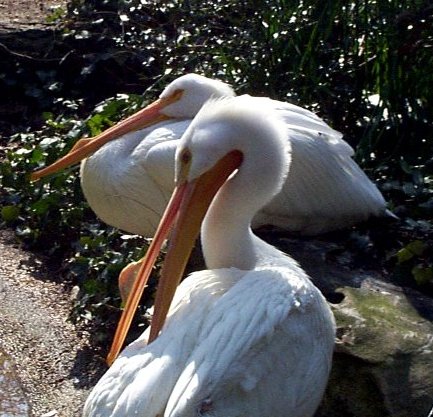
sail with a regatta of white pelicans
sing glory hallelujah with the cormorants
drying their wings over the water
and she said Baby I made you for this
cavort as you wish
And is it even okay if I don't paragraph
my letters
Sweetcakes God said
who knows where she picked that up
what I'm telling you is
Yes Yes Yes
Monday, January 16, 2012
Occupy The Spirit

I was invited to speak at an event called "Occupy the Spirit." It was all about exploring the spiritual roots of activism and social transformation. We had, among others, an Imam, a Buddhist, a radical lefty Christian, a Transition Town organizer, a civil disobedience teacher and a poet.
There was so much spoken about what we must do to transform ourselves before we can transform the world, so much to learn about living with conflict and bearing witness to discomfort and grief without having to solve it. Big stuff, and very inspiring.
My remarks as follows:
Occupy the Spirit
I’m so honored to be here. The truth is I’m a bit of an unlikely participant, so I want to give you the rundown on my spiritual street cred:
Historically Jewish - This is right in line with Occupy because Jews don’t need amplification and naturally communicate by yelling at each other. There’s also the concept of tikkun olam. That God made the world a little broken and that it’s our job to repair it.
Very inspired by Buddhism - Dalai Lama’s comment: my religion is compassion resonates deeply
Yoga teacher - which makes me a BuJuHindu.
Ordained minister with the Universal Life Church, which believes in democratizing the marital process and that everyone should have as much access to food, shelter, and sex as they want. Totally a dogma I can get behind!
I’m also married to a pagan whose sister is an evangelical Christian, and we live next door to Ruah the Quaker and another neighbor, who is a witch. So I feel like I’ve pretty much got most of the bases covered!
This gathering tonight is powerfully important. It’s vital to support the spiritual underpinnings of the Occupy movement. They’ve done a brilliant job of starting a huge, exploratory conversation about where we are as a people, and articulating the reality of how things have gone astray.
However, it’s very easy, when we start talking about the 99% and the 1% to get into an Us vs. Them mentality. Which is understandable, as there are great systemic and resource imbalances which must be addressed in the name of social and environmental justice. And it seems pretty clear who the perpetrators are and who’s not taking responsibility for making a great big mess of things.
But we, here, are also a gathering of spiritual seekers, and I don't think it would be an exaggeration to say that each of us are, fundamentally, an aspiring Bodhisattva. We are, each of us, committed to the liberation of the human spirit and of all sentient beings, and we are working, ultimately, for a planetary psycho-spiritual transformation.
We are working to lift the veil of illusion that we are somehow, in any way, separate from each other. We are working to release the myth that our human hearts beat to a rhythm that’s any different from the powerful, eternal pulse shared by all life on the planet.
We are constantly, committedly, reminding each other that 99% plus 1% equals One. We are One. While we might look like distinct little waves upon the sea, while we might wear the temporary mask of individuality, the essential substance of our being is an undivided whole, and the energy driving our momentary existence is nothing - nothing - but pure, Divine love.
That means Everyone. That means Everybody: the poor, the needy, the underserved. But it also means anyone trapped in the belief that they can find comfort, solace, and peace from the pursuit of endless power and material gain. That means anyone who would hate us for the essence of who we are and what we stand for. It means anyone we might be tempted to hate. It even - I daresay - means Newt Gingrich.
So how do we do it? How do we undertake this major gigantic colossal unbelievably huge whole systems inside-out top-to-bottom liberation and hopefully, thereby, repair the world? We accept the challenge. We Occupy ourselves. We work on shedding our own illusions, releasing our own fears. We strengthen the slow-twitch muscles of our compassion and our quick-twitch empathic reflexes. We tell fabulously inspiring tales about our inherent immanence - the truth that we are made of One Eternal Love. We choose to believe that as a people we are heading somewhere we actually want to go, and we share visionary stories of our remarkable, righteous, resilient future.
Now, nobody - from Moses to Mother Theresa to Mohammed to Martin Luther King - nobody said this work was easy. It's not. But we do it, as it says in 1st Corinthians 13, with faith, hope, and love. We do it because we must. We do it because we are the children of an utterly miraculous planet, a tiny aquamarine jewel floating in a sea of black velvet infinity. We are her warriors and her guardians and we do this work because our hearts demand it and because there is no one else to do it. We are, as the Hopi elders said, “the ones we’ve been waiting for.”
So, hold each other when times get hard and celebrate the joy, wonder and unbelievably good fortune of just being alive - even in These, our rather Interesting Times.
I’ll leave you with a poem from a man I like to call Saint Mullah Rabbi Brother Gary Snyder Rimpoche:
For the Children
The rising hills, the slopes,
of statistics
lie before us.
the steep climb
of everything, going up,
up, as we all
go down.
In the next century
or the one beyond that,
they say,
are valleys, pastures,
we can meet there in peace
if we make it.
To climb these coming crests
one word to you, to
you and your children:
stay together
learn the flowers
go light
Saturday, December 17, 2011
Rising Tide
 My latest VPR commentary. You can listen to it here.
Recently, I went to a concert given by some performers from remote Pacific island nations which are being rapidly inundated by rising sea levels - one of the many unfortunate consequences of climate change.
There were dancers, singers, and musicians all decked out in traditional woven costumes made by their families. The program said that the beauty and intricacy of the woven designs was indicative of how much the performers were loved by their families.
The performers themselves were like shimmering coppery earth spirits, dancing and singing a pounding, full-throated love lament for the tight communities and deep, ancient cultures being lost to the inexorably advancing tides.
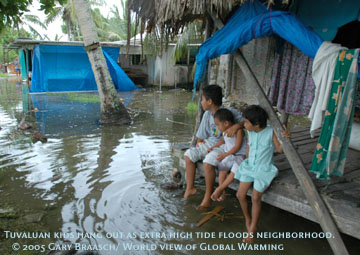
One of the islands represented, Tuvalu, is less than a mile wide and its highest point is about 6' above sea level. Climate change has progressed so far that their beaches are eroding and their crops are being poisoned by saltwater. Someday, in the not-too-distant future, there won't be a Tuvalu anymore. And they all know it.
Chatting with some of the performers afterwards, one of them told me that a little atoll where his grandfather used to live is already gone. Another young man said, "We are warriors. No matter how high the ocean gets, we will stay. We will die for our country."
I hugged him and made a big point of saying that I knew all about Tuvalu, and so did a lot of my friends, and our small place in the world was thinking about their small place in the world and doing our best to try and address this... But he stopped me and said, "It's not just us. It's everybody."
Of course he was right. And I was a little embarrassed. Because, despite being a die-hard climate activist, I somehow managed to forget, just for a moment, that it's all of us.
Everyone on the planet is being faced with some form of rising tide, and everything we know is going to be affected.
However, grim as the scientific predictions are, things often come along which still give me hope that we'll get our climatic act together. As it happens, I also just went to the annual conference of the Vermont Energy and Climate Action Network. It was attended by a huge cross section of people from all over the state: from conservation educators to town energy committee members. There were activists who'd gotten arrested protesting the Keystone pipeline and business leaders developing solar, wind, and geothermal projects. There were selectboardpeople, state representatives, agency secretaries, and even Bernie Sanders, who gave one of his rip-roaring, no-holds-barred speeches full of commitment, passion, and truth.
They were there to meet, to connect, to share ideas, and to continue the ongoing process of hashing through the nitty-gritty details of how we help our collective community enter a post-carbon age.
I came away reminded that in the face of all the rising tides, I am grateful and honored to live on my own little island of sanity and citizenship. I came away glad to live in Vermont.
There were dancers, singers, and musicians all decked out in traditional woven costumes made by their families. The program said that the beauty and intricacy of the woven designs was indicative of how much the performers were loved by their families.
The performers themselves were like shimmering coppery earth spirits, dancing and singing a pounding, full-throated love lament for the tight communities and deep, ancient cultures being lost to the inexorably advancing tides.
One of the islands represented, Tuvalu, is less than a mile wide and its highest point is about 6' above sea level. Climate change has progressed so far that their beaches are eroding and their crops are being poisoned by saltwater. Someday, in the not-too-distant future, there won't be a Tuvalu anymore. And they all know it.
Chatting with some of the performers afterwards, one of them told me that a little atoll where his grandfather used to live is already gone. Another young man said, "We are warriors. No matter how high the ocean gets, we will stay. We will die for our country."
I hugged him and made a big point of saying that I knew all about Tuvalu, and so did a lot of my friends, and our small place in the world was thinking about their small place in the world and doing our best to try and address this... But he stopped me and said, "It's not just us. It's everybody."
Of course he was right. And I was a little embarrassed. Because, despite being a die-hard climate activist, I somehow managed to forget, just for a moment, that it's all of us.
Everyone on the planet is being faced with some form of rising tide, and everything we know is going to be affected.
However, grim as the scientific predictions are, things often come along which still give me hope that we'll get our climatic act together. As it happens, I also just went to the annual conference of the Vermont Energy and Climate Action Network. It was attended by a huge cross section of people from all over the state: from conservation educators to town energy committee members. There were activists who'd gotten arrested protesting the Keystone pipeline and business leaders developing solar, wind, and geothermal projects. There were selectboardpeople, state representatives, agency secretaries, and even Bernie Sanders, who gave one of his rip-roaring, no-holds-barred speeches full of commitment, passion, and truth.
They were there to meet, to connect, to share ideas, and to continue the ongoing process of hashing through the nitty-gritty details of how we help our collective community enter a post-carbon age.
I came away reminded that in the face of all the rising tides, I am grateful and honored to live on my own little island of sanity and citizenship. I came away glad to live in Vermont.
Monday, December 12, 2011
Dancing to the Beat of the Great Green Heart
I recently gave the keynote address at the annual conference of the Vermont Energy and Climate Action Network. They brought me in specifically to be inspiring. No pressure!
This has been posted in 4 different clips - they're each about 10 minutes long.
Enjoy...
Monday, December 5, 2011
Happiness Paradigm

My friend Ginny Sassaman is a big Gross National Happiness proponent, and has written a lovely blog this week about how a talk I did inspired her to create something green. A heart.
On my way home, I went straight from the airport to the Unitarian Church of Montpelier for a workshop on “Climate Change and What You Can Do About It.” One of the speakers was Kathy Blume, a particularly bubbly environmental activist who ended her presentation by displaying a green heart decal. The decal, she explained, symbolized a commitment to adopting an approach of love as we face a future with enormous environmental, economic and social challenges.Gilding’s and Blume’s optimism definitely spoke to me — on some deep level, it seems. I woke up the next morning determined to make green heart pins from recycled paper and leftover glitter, beads and other fun items folks have been donating to me. Wearing these pins can be a very visible declaration of love — love for our beautiful planet, for the plants and animals and for all the wonderful humans who make us happy and also drive us crazy.
It's so nice when people actually let you know you've inspired them!
Read the rest of her post here.
Subscribe to:
Posts (Atom)

 Posts
Posts

